All-weather vs winter tires: which do you need in Toronto?
12 October 2026
If your winters are mostly plowed city streets, all-weather tires can be enough. If you deal with ice, unplowed roads or long highway drives out of the city, a dedicated winter tire still stops and turns better. Neither is a scam. They solve different problems, and the right one depends on how you actually drive between November and March.
Three kinds of tire, not two
The names make this harder than it should be, so here is the plain version.
All-seasontires are what most cars come with from the factory. They're built for spring, summer and fall. Below about 7°C the rubber stiffens and grip drops off, snow or no snow.
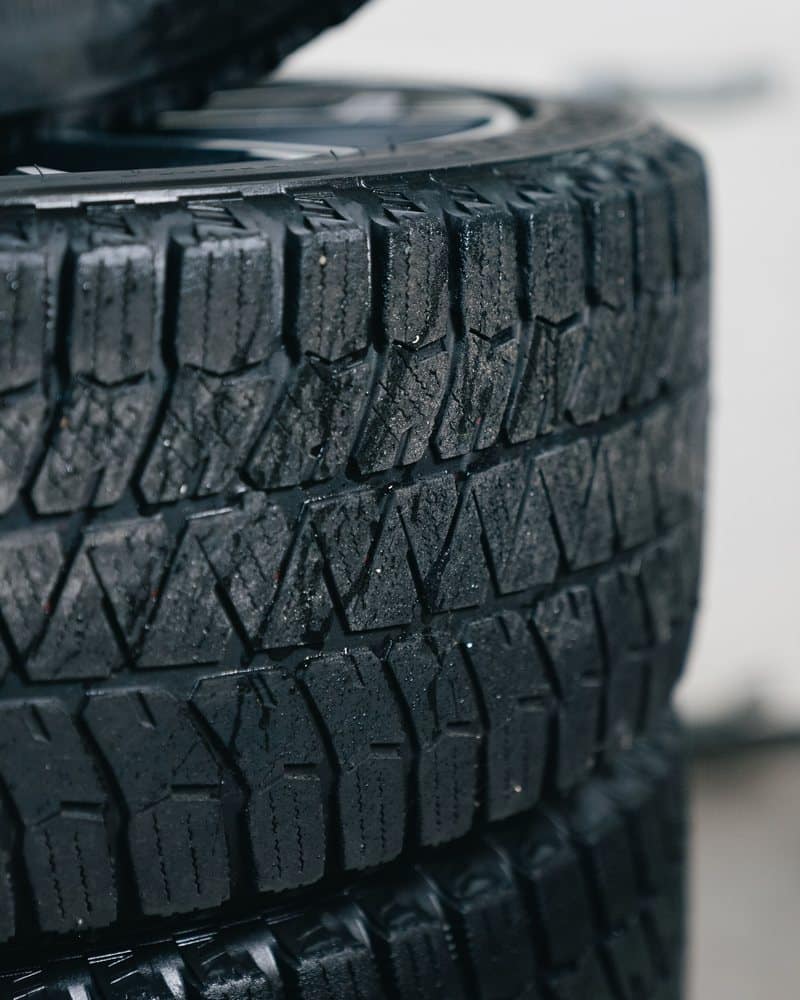
Winter tires use a soft compound that stays flexible in deep cold, with deep tread and lots of small cuts (sipes) that bite into snow and ice. They go on in the fall and come off in spring.
All-weathertires sit in between. They carry the three-peak mountain and snowflake symbol, which means they passed a snow traction test, but they're built to stay on the car all year.
Where winter tires still win
On ice, on packed snow, and on a cold morning well below zero, a winter tire gives you shorter stopping distances and more grip in a corner. That gap is widest exactly when you need it most: the first icy morning, the intersection that never got salted, the 401 in a squall. If your winter driving takes you outside the city, up north, or onto roads that are plowed last, that difference is the whole point.
Where all-weather tires win
They never come off. No twice-a-year changeover, no second set to store, no booking in the November rush. For a driver who stays mostly on main roads in Toronto and can work from home on the worst storm days, that convenience is real.
The catch is wear. Because all-weather tires run through the summer heat too, they usually wear faster than an all-season would, and they give up some of the summer handling an all-season has. You're buying one compromise tire instead of two specialist ones.
What each costs you over a year
A winter setup means two sets of tires and two changeovers a year. At Boss Tire a seasonal changeover starts at $160before tax, depending on your vehicle, and storage for the set you're not using is $110if you don't want it in your garage. Each set only wears for half the year, so it lasts longer.
All-weather means one set and no swap, but that set does all the wearing. Over the life of the car the gap is smaller than it looks, and the insurance discount can tip it: some insurers only give it for dedicated winter tires. We cover that in are winter tires mandatory in Ontario.
Which one we'd tell a Toronto driver to buy
Mostly city, mostly main roads, and you'd rather never think about a changeover: all-weather is a reasonable choice. Commuting on the highway, driving north for the weekend, parked outside overnight, or a newer driver: put a proper winter set on. If you're going winter, putting the set on its own rims makes every swap quicker; see winter rims and packages.
Call the shop with your tire size and we'll tell you what we have that fits, or browse new and used tires.
All-weather vs winter questions
- Are all-weather tires better than winter tires?
- Not in winter. A dedicated winter tire grips better on ice, packed snow and very cold pavement. An all-weather tire is better across the whole year, because it can stay on in summer and a winter tire can't.
- What are the disadvantages of all-weather tires?
- Less grip than a winter tire on ice and in deep cold, and faster wear than an all-season in summer heat, because they never come off. You trade some performance at both ends of the year for not having to swap.
- Do I need snow tires if I have all-weather tires?
- For most city driving on plowed Toronto roads, no. If you regularly drive unplowed roads, steep hills, rural highways or cottage country, a dedicated winter set is still the safer choice.
- Is it okay to use winter tires in summer?
- It isn't a good idea. The soft winter compound wears quickly on hot pavement, and braking and handling get worse in the heat. Swap back once daytime highs stay above about 7°C.
- Are all-weather tires considered winter tires for insurance?
- Some insurers accept all-weather tires that carry the three-peak mountain and snowflake symbol for the winter tire discount; others don't. Ask your insurer before you buy.
Not sure which set is right for you?
Call the shop, tell us how you drive, and we'll tell you straight. Fitted, balanced and torqued while you wait.
4.8 from 334 Google reviews(opens Google in a new tab)